
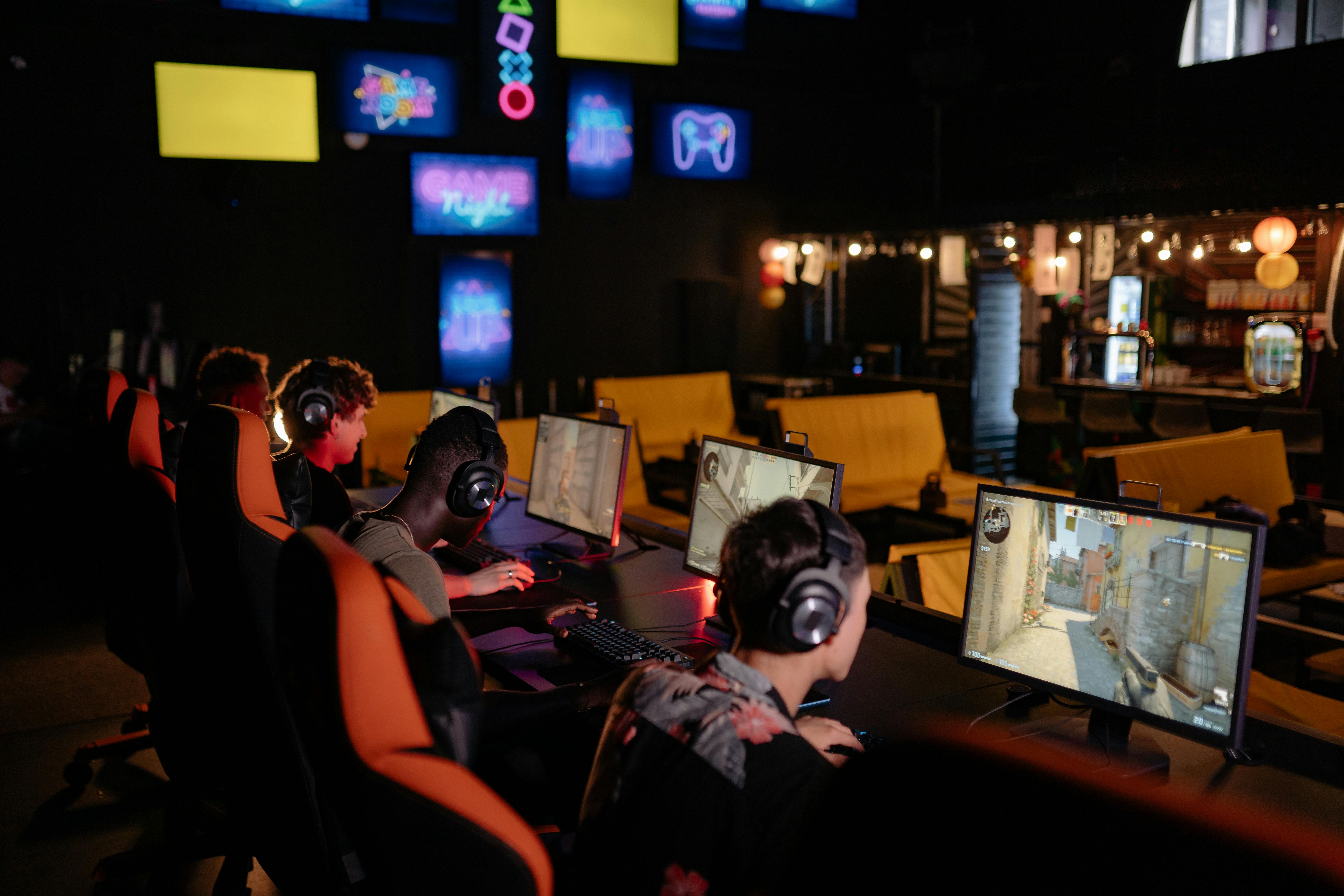
Dive into the future of gaming with our ultimate 2026 guide to next-gen VR and AR headsets. Discover the best virtual reality devices, compare top models like the Meta Quest 4 Pro, Apple Vision Pro 2, and PlayStation VR3, and learn how to buy the perfect immersive gaming setup. Optimize your experience with cloud VR gaming, explore cutting-edge mixed reality technology, and find unbeatable deals on VR accessories and games. Your journey to unparalleled digital worlds starts here!
Introduction to the Topic
Welcome to 2026, a year where the boundaries between the physical and digital realms have blurred into an exhilarating new frontier: Mixed Reality (MR) gaming. What began as clunky, wire-laden virtual reality experiments a decade ago has matured into a sophisticated, seamless ecosystem of high-fidelity headsets, intuitive interfaces, and breathtaking experiences. This isn't just about escaping reality; it's about augmenting it, enhancing it, and sometimes, completely reimagining it. From the living room floor transforming into an alien battlefield to collaborative design sessions conducted in a shared virtual space, MR gaming is no longer a niche curiosity but a mainstream entertainment powerhouse and a burgeoning economic engine.
The market is flooded with innovation, making the choice of the right immersive gaming device both exciting and overwhelming. Whether you're a hardcore gamer seeking the ultimate competitive edge, a casual player looking for new ways to connect and explore, or a tech enthusiast eager to embrace the next big thing, understanding the landscape of next-gen VR/AR headsets is paramount. This comprehensive guide from mediatalks.de is designed to cut through the noise, providing you with expert analysis, crucial comparisons, and actionable insights to help you make the smartest purchasing decisions. Get ready to unlock unparalleled immersion and discover the best VR headset for your ultimate 2026 gaming adventure.
Backgrounds & Facts
The journey to 2026 has been marked by exponential advancements in display technology, processing power, and spatial computing. Early VR headsets, while groundbreaking, often suffered from 'screen-door effect', limited fields of view, and the constant tether of cables. Fast forward to today, and we're witnessing devices boasting micro-OLED displays with resolutions exceeding 4K per eye, foveated rendering that intelligently allocates processing power where your gaze is focused, and near-perfect passthrough capabilities that blend digital objects seamlessly into your real-world environment. This evolution has given rise to true Mixed Reality, where AR (Augmented Reality) and VR (Virtual Reality) are no longer distinct experiences but two sides of the same immersive coin.
Key technological breakthroughs in recent years include:
- Advanced Optics & Displays: Pancake lenses, micro-OLED, and QLED technologies have enabled lighter, slimmer headsets with wider fields of view and stunning pixel density, virtually eliminating motion sickness for many users.
- Inside-Out Tracking & Passthrough: Headsets now feature multiple external cameras for precise room-scale tracking without external base stations. These cameras also provide high-resolution, low-latency color passthrough, making MR experiences incredibly convincing.
- Haptic Feedback & Controllers: Next-generation controllers offer advanced haptic feedback, simulating textures, impacts, and resistance with uncanny realism. Some systems are even integrating eye-tracking and hand-tracking directly, allowing for controller-free interaction.
- Wireless & Standalone Power: The proliferation of powerful mobile chipsets (like custom Snapdragon XR platforms and Apple's R-series chips) has made standalone, high-fidelity VR/AR a reality, freeing users from PCs and cables.
- Cloud VR Gaming: High-speed internet and sophisticated streaming algorithms now allow computationally intensive VR titles to be rendered in the cloud and streamed directly to your standalone headset, offering PC-level graphics without the need for expensive local hardware. This service model is a game-changer for accessibility and content breadth.
The market has seen significant growth, with analysts predicting the immersive technology sector to reach hundreds of billions by the end of the decade. Major players like Meta, Apple, Sony, HTC, and emerging competitors are locked in an innovation race, pushing the boundaries of what's possible and driving down prices for increasingly powerful hardware. This competitive landscape directly benefits consumers, offering more choices and better value than ever before for those looking to buy VR equipment.
Expert Opinion / Analysis
According to Dr. Lena Schmidt, a leading XR anthropologist at the Institute for Digital Futures, "2026 marks a pivotal moment. We've moved past the novelty phase. MR is no longer just a 'cool tech demo'; it's a platform for genuine social connection, profound narrative experiences, and even productivity. The integration of AI-driven NPCs and dynamic, procedurally generated worlds means every play-through can be unique, adapting to the user's choices and behaviors."
Industry veteran and game developer, Marcus "Maddog" Jensen, CEO of 'Reality Forge Studios', emphasizes the importance of content. "Hardware is only as good as the experiences it enables. We're seeing a surge in AAA VR titles, not just ports, but games built from the ground up for immersive interaction. Furthermore, the rise of cloud VR gaming is democratizing access to these high-fidelity experiences. No longer do you need a €2000 gaming PC; a robust internet connection and a capable standalone headset are enough. This opens up the market to millions more potential players, which is fantastic for developers and consumers alike."
Accessibility is another key focus. "Comfort, weight distribution, and ease of setup are critical," notes tech journalist and VR reviewer, Chloe Davies. "The best VR headsets of 2026 are those that disappear, allowing the user to fully immerse themselves without distraction. We're also seeing significant improvements in eye-tracking for accessibility features, making VR more inclusive for everyone. When you're comparing VR devices, don't just look at specs; consider the entire user experience, from onboarding to long-term wear." The consensus is clear: the future of gaming is immersive, interconnected, and increasingly, an extension of our physical world.
💰 Best Options in Comparison (VERY IMPORTANT)
Choosing the right VR/AR headset in 2026 can significantly impact your immersive gaming journey. Here's a breakdown of the leading contenders, optimized for different user needs and budgets. Remember to compare prices and check for the latest deals before you buy!
-
Meta Quest 4 Pro: The Powerhouse for Enthusiasts & Developers
Building on Meta's legacy, the Quest 4 Pro (often found with the best VR headset deals) is the undisputed king of standalone versatility. It features stunning dual 4K micro-OLED displays, advanced eye and face tracking for realistic avatars, and a vastly improved passthrough system for seamless mixed reality experiences. Its powerful custom XR2 Gen 3 chip handles complex applications with ease, and its extensive app library is unmatched. Ideal for those who want a robust, all-in-one solution for both gaming and productivity. Meta's ecosystem continues to offer a wide array of games and social experiences. Check Meta Quest 4 Pro prices now!
-
Apple Vision Pro 2: The Premium MR Experience
While often positioned more for spatial computing and productivity, the Vision Pro 2 is an undeniable force in mixed reality gaming for those with a premium budget. Its unparalleled display quality (even higher resolution than the Quest 4 Pro), intuitive gesture controls, and deep integration with the Apple ecosystem make it a dream for high-fidelity AR experiences and select VR titles. If you value crystal-clear visuals, a sleek design, and don't mind the higher price tag, this is the ultimate luxury device. Its gaming library is growing rapidly, particularly for augmented reality experiences. Explore Apple Vision Pro 2 bundles!
-
PlayStation VR3 (PSVR3): Console VR King
For PlayStation 6 owners, the PSVR3 remains the definitive choice for console-based virtual reality. With a streamlined single-cable setup, vibrant OLED displays, and haptic feedback integrated directly into its Sense controllers and headset, it offers incredibly immersive gaming experiences tailored specifically for Sony's powerful console. The exclusive game library, featuring AAA titles from first-party studios, is a major draw. If you're invested in the PlayStation ecosystem and want the best console VR, look no further. Find the best PlayStation VR3 deals here!
-
HTC Vive XR Elite 2: The Modular & Open Platform
HTC continues its commitment to modularity and an open ecosystem with the Vive XR Elite 2. This device offers hot-swappable batteries, a lightweight design, and excellent passthrough. It's particularly appealing to enterprise users, but its robust PC VR streaming capabilities and growing standalone library make it a strong contender for serious gamers who appreciate flexibility and customization. It's often favored by developers and those who want an alternative to the Meta ecosystem. Compare HTC Vive XR Elite 2 features!
-
Pimax Crystal 2: Unrivaled Visual Fidelity (PC VR)
For the uncompromising PC VR enthusiast, the Pimax Crystal 2 offers industry-leading resolution (well over 4K per eye) and an incredibly wide field of view. While it requires a high-end gaming PC, the visual clarity and immersion are unmatched. It's a niche product for those who prioritize graphical fidelity above all else and are willing to invest in the necessary hardware. Get the Pimax Crystal 2 for ultimate PC VR!
| Feature / Headset | Meta Quest 4 Pro | Apple Vision Pro 2 | PlayStation VR3 | HTC Vive XR Elite 2 | Pimax Crystal 2 |
|---|---|---|---|---|---|
| Primary Use | Standalone VR/MR, PC VR (wireless) | Spatial Computing, Premium MR | Console VR (PS6 exclusive) | Standalone VR/MR, PC VR (wired/wireless) | High-Fidelity PC VR |
| Display Type & Resolution | Dual 4K Micro-OLED | Dual 4.5K Micro-OLED | Dual 2K OLED | Dual 2K LCD (Pancake Lenses) | Dual 4K QLED (Aspheric Lenses) |
| Passthrough Quality | Excellent (Full Color, Low Latency) | Industry-Leading (Full Color, Near-Perfect) | Good (Monochrome for MR) | Very Good (Full Color) | Basic (Monochrome) |
| Field of View (FOV) | ~110-120° | ~100-110° | ~110° | ~110° | ~140° (often wider) |
| Processor | Snapdragon XR2 Gen 3 | Apple R2 & M3/M4 | Custom PS6 Chip | Snapdragon XR2 Gen 2 | N/A (PC Powered) |
| Tracking | Inside-Out, Eye, Hand, Face | Inside-Out, Eye, Hand, Audio | Inside-Out, Eye | Inside-Out, Eye, Hand | Inside-Out, Eye (optional external) |
| Price Range (Est. 2026) | €800 - €1200 | €3000 - €4000+ | €600 - €800 | €1000 - €1500 | €1500 - €2000+ (headset only) |
| Best For | All-around standalone gaming & MR, social VR | Premium MR, spatial computing, Apple ecosystem users | PlayStation gamers seeking console VR | Modular design, PC VR enthusiasts, open platform | Extreme visual fidelity, PC VR power users |
When making your decision, consider your primary use case, budget, and existing hardware ecosystem. Don't forget to factor in the cost of top VR games and any necessary accessories like prescription inserts or enhanced headstraps. Many retailers offer attractive bundles and financing options, so always compare offers to get the best deal on your next-gen gaming device.
Outlook & Trends
The immersive gaming landscape is far from static. Looking ahead, several exciting trends are poised to redefine our digital interactions:
- Haptic Evolution: Expect more sophisticated haptic feedback beyond controllers. Haptic vests, gloves, and even full-body suits are becoming more affordable and integrated, offering tactile sensations that will deepen immersion dramatically. Imagine feeling the rain, the impact of a punch, or the texture of a virtual object.
- AI Companions & Dynamic Worlds: Generative AI will play an even larger role, creating truly dynamic NPCs that learn, adapt, and remember interactions, as well as procedurally generating vast, unique worlds that respond to player actions in real-time. This means endless replayability and truly personalized adventures.
- Brain-Computer Interfaces (BCI): While still in nascent stages for consumer gaming, early BCI integrations will start appearing, allowing for subtle control inputs or even emotional feedback directly from the user's brainwaves. This could revolutionize accessibility and interaction paradigms.
- Decentralized Metaverse & Digital Ownership: The concept of a persistent, interconnected metaverse, often built on blockchain technology, continues to gain traction. Expect more games to integrate true digital asset ownership (NFTs) and cross-platform interoperability, allowing players to carry their items and identities across different virtual worlds. This is a significant area for future investment and digital commerce.
- Lighter, More Discreet Devices: The ultimate goal is for AR/VR devices to become as sleek and unobtrusive as regular eyeglasses. Continued breakthroughs in optics, battery technology, and processing miniaturization will bring us closer to this vision, making immersive tech a constant companion rather than a dedicated gadget.
- Cloud Gaming Dominance: The growth of cloud VR gaming services will continue to accelerate, making high-end VR experiences accessible to a broader audience without the need for expensive local hardware. Subscription models will become even more prevalent, offering vast libraries of games for a monthly fee.
These trends point towards a future where immersive gaming is not just about playing games, but about living rich, interactive digital lives that seamlessly blend with our physical existence. The opportunities for developers, content creators, and consumers are immense.
Conclusion
The year 2026 stands as a monumental period in the evolution of gaming. Next-gen VR and AR headsets are no longer just futuristic gadgets; they are sophisticated portals to unparalleled immersion, offering experiences that transcend traditional gaming. Whether you're drawn to the all-in-one power of the Meta Quest 4 Pro, the premium elegance of the Apple Vision Pro 2, the console-optimized magic of the PlayStation VR3, the modular flexibility of the HTC Vive XR Elite 2, or the visual supremacy of the Pimax Crystal 2, there's a perfect immersive device waiting for you.
The decision to invest in a next-gen VR/AR headset is a step into a vibrant, ever-expanding universe of digital possibilities. By leveraging our expert comparisons and understanding the key features, you can confidently choose the best VR headset that aligns with your gaming aspirations and budget. Don't just play the game; step inside it. The future of gaming is here, and it's more immersive than you ever imagined. Ready to upgrade your reality? Explore the best VR headset deals and start your immersive journey today!