
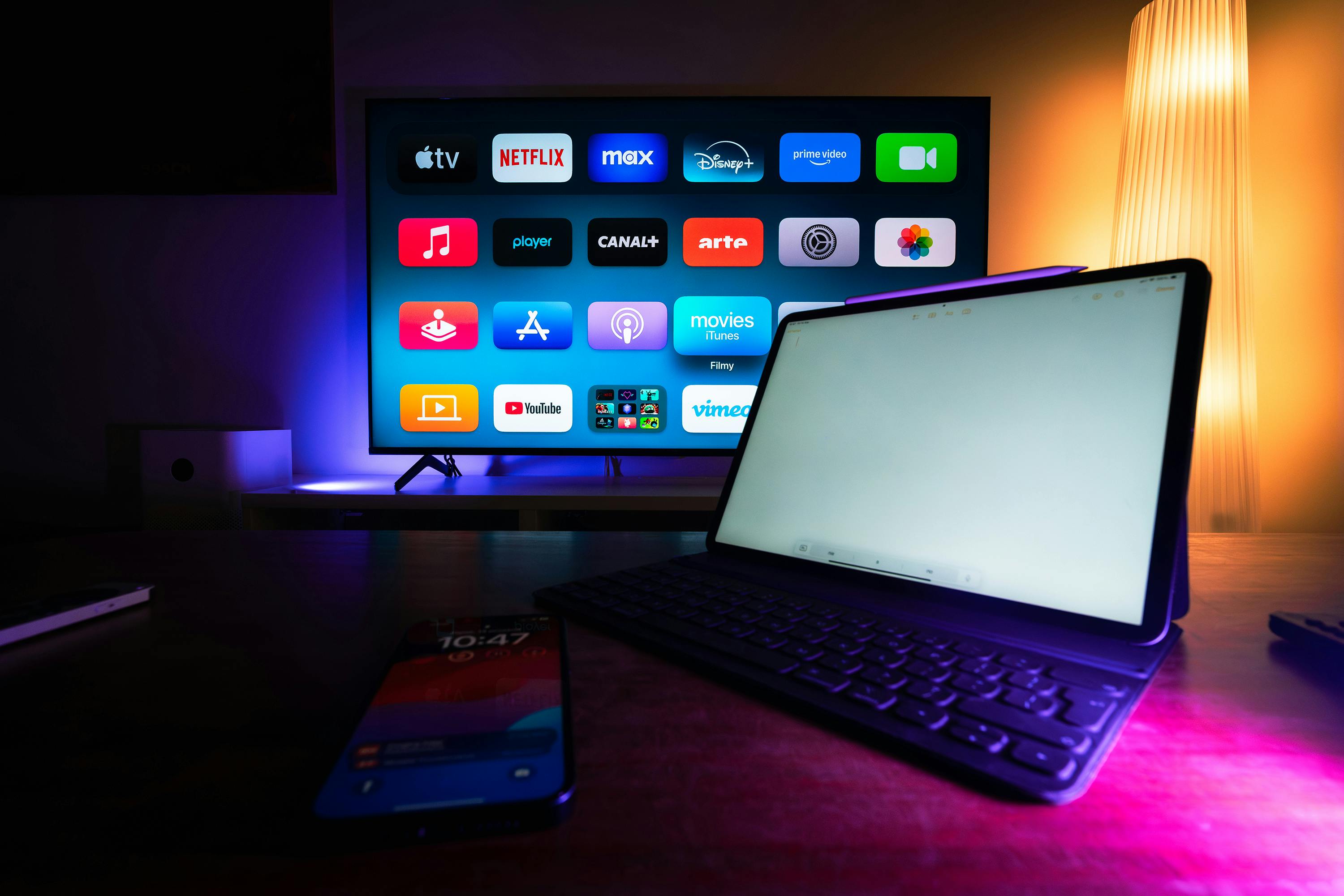
Navigating the complex 2026 streaming landscape just got easier! Discover how to combat subscription fatigue, leverage ad-supported tiers, and master streaming bundles to save money and maximize your entertainment value. This guide provides expert analysis, comparisons, and actionable strategies for smart streaming in Germany and beyond.
Introduction to the Topic
Welcome to 2026, where the streaming wars have evolved into a complex ecosystem of endless choices, fluctuating prices, and a bewildering array of ad-supported and premium tiers. What started as a simple alternative to linear television has mushroomed into a financial labyrinth for many households. Are you feeling the pinch? Are you tired of juggling multiple subscriptions, only to realize you’re paying more than ever for content you barely watch? You're not alone. The phenomenon of 'subscription fatigue' is at an all-time high, with consumers in Germany and across Europe actively seeking ways to streamline their digital entertainment while keeping costs in check.
Here at mediatalks.de, we understand the challenge. Our mission is to cut through the noise and provide you with a clear, actionable roadmap to reclaim control over your streaming budget. This comprehensive guide will equip you with the knowledge to make informed decisions, whether you're considering an ad-supported Netflix plan, eyeing the latest Telekom MagentaTV bundle, or wondering if 'content hopping' is truly the answer. Get ready to transform your streaming strategy from a costly habit into a smart, cost-effective entertainment powerhouse.
Backgrounds & Facts
The streaming landscape of 2026 is a far cry from the nascent days of the late 2010s. Back then, a handful of dominant players like Netflix and Amazon Prime Video offered vast libraries for a single, predictable monthly fee. Fast forward to today, and we're witnessing a fragmented market driven by intense competition, the pursuit of profitability over pure subscriber growth, and a strategic shift towards diversified revenue streams. Every major media conglomerate, from Disney to Warner Bros. Discovery (Max), Paramount (Paramount+), and NBCUniversal (Peacock), has launched its own direct-to-consumer service, each vying for your precious euros and attention.
A pivotal development in this evolution has been the widespread adoption of ad-supported tiers. What was once an anomaly is now a standard offering, with almost every major service – Netflix, Disney+, Max, Prime Video, and even local players like Joyn and RTL+ – presenting cheaper, ad-interspersed options. This move, initially met with skepticism, has proven a critical tool for retaining price-sensitive subscribers and attracting new ones in a saturated market. For example, Netflix's ad-supported plan, launched in 2022, has seen significant uptake, demonstrating consumer willingness to trade a few commercials for substantial savings.
Simultaneously, we're observing a fascinating trend: the re-bundling of streaming services. After years of unbundling from traditional cable, consumers are now presented with curated packages from telecommunication providers (e.g., Vodafone GigaTV, Deutsche Telekom's MagentaTV with integrated streaming deals), device manufacturers, or even directly from streaming giants themselves (e.g., the Disney Bundle in some regions). These bundles promise convenience and perceived savings, attempting to combat the 'paradox of choice' and subscription fatigue by simplifying the decision-making process. However, the true value of these bundles often requires careful scrutiny, as not all packages are created equal.
Statistics from early 2026 indicate that the average German household now subscribes to 3.8 streaming services, with monthly expenditures ranging from €30 to €70. This substantial outlay highlights the urgent need for smarter consumption strategies. Our analysis shows that a significant portion of these costs could be mitigated by strategically opting for ad-supported plans or carefully selected bundles, without sacrificing access to desired content.
Expert Opinion / Analysis
“The streaming landscape in 2026 is a battleground not just for content, but for consumer wallets,” states Dr. Anya Schmidt, a leading media economist at the Berlin Institute for Digital Media. “Companies are no longer solely focused on subscriber numbers; profitability is the new king. Ad-supported tiers are a clear manifestation of this, allowing platforms to diversify revenue beyond just subscription fees, leveraging sophisticated AI for hyper-targeted advertising. This is a win for platforms, but also offers a tangible benefit to consumers willing to accept a trade-off.”
Dr. Schmidt further elaborates on the re-bundling trend: “While seemingly a step backward to the cable era, these new bundles are far more agile and often digital-first. Telcos like Deutsche Telekom or Vodafone are positioning themselves as content aggregators, offering seamless integration and often exclusive deals that individual consumers might not access. The key for consumers is to evaluate whether these bundles truly align with their viewing habits and offer genuine savings, or if they’re simply 'packaging' unwanted services.”
From a technological standpoint, the integration of AI is revolutionizing both content discovery and advertising. Advanced algorithms now analyze viewing patterns, preferences, and even emotional responses to recommend not only the next show but also the most relevant advertisements. This hyper-personalization means ad-supported tiers in 2026 are often less intrusive than traditional TV commercials, serving up ads that are genuinely of interest to the viewer. This nuanced approach makes the ad-supported option increasingly palatable for many, transforming it from a mere cost-saving measure into a potentially more personalized viewing experience.
Our analysis suggests that the optimal strategy for consumers in 2026 involves a hybrid approach. Blindly subscribing to every ad-free service is no longer economically viable for most. Instead, a thoughtful combination of carefully selected ad-supported plans for general viewing, perhaps one or two premium ad-free subscriptions for must-watch exclusive content, and leveraging smart bundles for family-wide access, presents the most balanced and cost-effective solution. The era of ‘set it and forget it’ subscriptions is over; proactive management is paramount.
💰 Best Options in Comparison (VERY IMPORTANT)
To help you navigate the complex world of streaming in 2026, we’ve identified four key strategies, each tailored to different viewing habits and budget priorities. Remember, the 'best' option is always the one that fits *your* specific needs.
-
1. The 'Lean & Mean' Ad-Supported Strategist
This strategy is for the budget-conscious viewer who prioritizes access to a wide range of content at the lowest possible price point. You're comfortable with occasional ad breaks and actively seek out the most economical tiers. This approach can drastically cut monthly spending while still providing access to blockbuster movies and trending series.
-
2. The 'Smart Bundler'
Ideal for households with diverse viewing interests or those who prefer the convenience of a single bill. This strategy involves carefully selecting official streaming bundles (e.g., Disney+ & Hulu in some regions, or local telecom bundles like MagentaTV with Netflix/Sky). The key is to ensure the bundle truly offers a discount over individual subscriptions and includes services you genuinely want to watch.
-
3. The 'Premium Purist'
For those who cannot tolerate ads and demand the highest quality (4K, HDR, Dolby Atmos) without interruption. While this is the most expensive route, a smart Premium Purist will still optimize by unsubscribing from services during periods of low usage or by rotating subscriptions to catch specific shows. They prioritize an uninterrupted, high-fidelity experience.
-
4. The 'Content Hopper'
This dynamic strategy involves subscribing to a service for a month or two to binge-watch specific content, then canceling and moving to the next. It requires discipline and active management but can offer incredible savings for viewers primarily interested in specific shows or movies rather than broad libraries. Free trials are your best friend here!
To help you compare these strategies and make an informed decision, here's a detailed comparison table:
| Strategy Name | Target User | Pros | Cons | Estimated Monthly Savings (vs. individual ad-free) | Recommended Services/Bundles (Examples 2026) | Call to Action |
|---|---|---|---|---|---|---|
| Lean & Mean Ad-Supported Strategist | Budget-conscious, comfortable with ads, broad content interest. | Significantly lower monthly costs, access to major platforms. | Ad interruptions, sometimes lower video quality, no offline downloads on some tiers. | €15-€30+ | Netflix Basic with Ads, Disney+ Standard with Ads, Max Ad-Supported, Joyn PLUS+, RTL+ Max. | Explore Ad-Supported Deals Now! |
| Smart Bundler | Families, diverse viewing needs, prefers single bill convenience. | Often discounted compared to individual subs, simplified billing, curated content access. | Might include unwanted services, less flexibility, long-term commitment often required. | €10-€25+ | Telekom MagentaTV (with Netflix/Disney+/Sky options), Vodafone GigaTV (with Max/Paramount+), Sky Entertainment Plus (with Netflix). | Compare Top Streaming Bundles! |
| Premium Purist | Demands ad-free, 4K HDR, offline downloads, seamless experience. | Uninterrupted viewing, highest quality, full feature set. | Highest monthly cost, potential for subscription fatigue if not managed. | €0 (focus is on quality, not savings, but managing subscriptions can save) | Netflix Premium, Apple TV+, Prime Video, Max Ultimate Ad-Free. | Find Your Ad-Free Premium Experience! |
| Content Hopper | Watches specific shows/movies, highly disciplined, enjoys variety. | Maximizes content access for minimal cost, ultimate flexibility. | Requires active management (subscribing/canceling), risk of missing new content. | €20-€40+ (by only paying for 1-2 services at a time) | Any service with a strong seasonal release schedule (e.g., Apple TV+ for specific series, Paramount+ for new films). | Start Your Free Trial Hopping Journey! |
Prices and offers are illustrative for 2026 and subject to change by providers. Always check current terms and conditions.
Outlook & Trends
What does the future hold for streaming beyond 2026? We anticipate several key trends that will further shape how we consume digital entertainment:
- Hyper-Personalized Pricing: Expect more dynamic pricing models. AI will analyze individual viewing habits, demographics, and even willingness-to-pay to offer highly personalized subscription tiers or bundle recommendations. This could mean different prices for different users based on their engagement.
- Interactive Content & Live Experiences: The lines between passive viewing and active participation will blur. More interactive shows, live shopping integrations, and unique live events (concerts, sports, gaming tournaments) with audience participation will become standard, potentially even driving new premium tiers.
- Gaming Integration: Cloud gaming services will increasingly merge with video streaming platforms. Imagine seamlessly switching from watching a movie to playing a game from the same app, potentially bundled into a single entertainment subscription.
- Further Consolidation & Niche Services: While major players may consolidate, there will also be a rise in highly specialized, niche streaming services catering to very specific interests (e.g., dedicated services for documentaries, classic films, or even local community content). These will likely operate on lower-cost, ad-supported models.
- Deep AI in Content Creation: AI won't just recommend; it will assist in creating content, from scriptwriting and animation to generating personalized alternate endings or character storylines, further enhancing the bespoke nature of future entertainment.
The landscape will continue to evolve, but the core principle remains: informed consumer choice will be your most powerful tool.
Conclusion
The streaming world of 2026 is undeniably complex, but it's also ripe with opportunities for the savvy consumer. By understanding the dynamics of ad-supported tiers, carefully evaluating streaming bundles, and adopting a strategic approach to your subscriptions, you can significantly reduce your monthly outlay without compromising on the entertainment you love. No longer must you be a passive recipient of rising costs; instead, you can become an active architect of your digital entertainment experience. Take control, compare your options, and make 2026 the year you master your streaming budget. Your wallet (and your binge-watching schedule) will thank you!